Rob Gilks
Software engineer and technical lead with more than 30 years of experience building backend services, cloud infrastructure and web applications.
profile
Software engineer and technical lead with more than 30 years of experience building backend services, cloud infrastructure and web applications. I lead teams while remaining hands-on with the code.
Through my company, Total Reality Engineering, I am currently delivering a software engineering contract for Turner & Townsend via esynergy, on their Hive project and portfolio delivery platform. I use Python, PostgreSQL, Terraform, TypeScript and Angular on Google Cloud.
Previously, I led the API team behind Cambridge English's automated text and speech assessment services, which ran at 99.98% uptime over twelve months. I also build AI language-learning products through Total Reality Engineering.
skills
A working stack across product, platform and applied ML - not a single specialism.
platform & MLOps
languages
AI & ML
AI evaluation
web & cloud
practice
personal projects
Browser games and GPU simulations - not production experience.
experience
My own company since 1998, delivering client contracts and my own products.
- Client engagement for Turner & Townsend, via esynergy (Aug - Dec 2026): delivering software engineering on Hive, their project and portfolio delivery platform, using Python, PostgreSQL, Terraform, TypeScript and Angular on Google Cloud.
- Building and running live AI products for language learning and assessment (below) on Cloudflare Workers, with serverless GPU inference on Modal.
- Fine-tuning and deploying transformer models on serverless GPUs, with post-hoc calibration and grammar correction alongside the scorer.
- Choose and gate models on measured evidence: frozen benchmarks with held-out folds, fail-closed quality checks on generated content, and side-by-side model comparisons scored on task success, convergence and failure modes.
- Led the TAPI team within Assessment & Research Capabilities (ARC), building and operating the Text and Speech APIs that power automated marking across Cambridge English assessments, including Write & Improve and Speak & Improve - and stayed the largest individual contributor to the Text API while leading it. The platform held 99.98% uptime across twelve months at around a 1% change-failure rate.
- Operated the response-validity suite that decides whether a submission can be marked at all - off-topic, gibberish, insufficient-English, offensive and repetition detection, plus copy-detection. The detectors were the ML teams' work; running them dependably in production was mine.
- Instigated and built two of the platform's systems: Text Orchestrator, the Clojure/AWS service that drives automated text assessment, and the multi-account automarking administration dashboard in Next.js, React and TypeScript on AWS Amplify/Cognito.
- Productionised Python NLP/ML inference as Dockerised SQS workers with CI/CD, diagnostics, log redaction and LocalStack/AWS tests, hardened the services around them with retries, idempotency and alarms, and was one of the most active contributors to the Terraform monorepo underneath.
- Owned my team's part of the Cyber Essentials Plus compliance programme - the assessment APIs - covering AWS account scope reduction, CVE and IAM remediation, secrets, backup and disaster recovery, and a written security incident response procedure.
- Moved the team towards continuous delivery - deployment separated from release behind feature flags, four environments gated by automated acceptance tests, and DORA metrics tracked with a tool I wrote and open-sourced. Ran an Accelerate reading group to build the case.
- Built the team's documentation culture - architecture and diagrams as code, RFCs, runbooks, incident response and a public API documentation site - and introduced its AI-assisted code review process, with automated pre-review on every pull request and risk-tiered approvals so human review concentrates on intent and operational impact.
- Senior engineer on Speak & Improve - an AI feedback tool that helps English learners worldwide improve their speaking, built in Clojure around custom marking models.
- Moved to the API team, which became TAPI within ARC following ELiT's integration into Cambridge in 2025.
- Led four to six engineers while remaining hands-on and owning delivery for a system that enabled clinical research sites to communicate with trial patients by SMS.
- The role ended in a company-wide redundancy round.
Concurrent contract roles for multiple clients through my company.
- CTO, Limpid Markets (2018-2020) - set the technical direction for a precious-metals derivatives trading platform and transitioned software delivery from a London team to a Ukraine-based team.
- Technical Lead, Predira (2020-2022) - built the early prototypes of a customisable brokerage trading platform with the founder, then grew the team and engineering practices.
- Technical Lead, SimPlay (2019-2021) - rebuilt a platform for running collaborative role-play training experiences online.
- Ten years building interactive products and campaigns for Nike, Heineken, Nissan, the BBC and Ford - including Heineken Star Player (Cannes Gold Cyber Lion) and the BBC's Story of Life.
- LTA - TotalTennis club website platform and live tournament scoring (Nottingham, Eastbourne). Oxford University LTG - Java learning tool middleware. Play Sport / Pretzel Logic - sports club and government web systems. Ampac Australia - fire-detection systems, from electronics technician to R&D engineer.
selected projects
Built and run independently. All live and open where noted - the code is there to read.
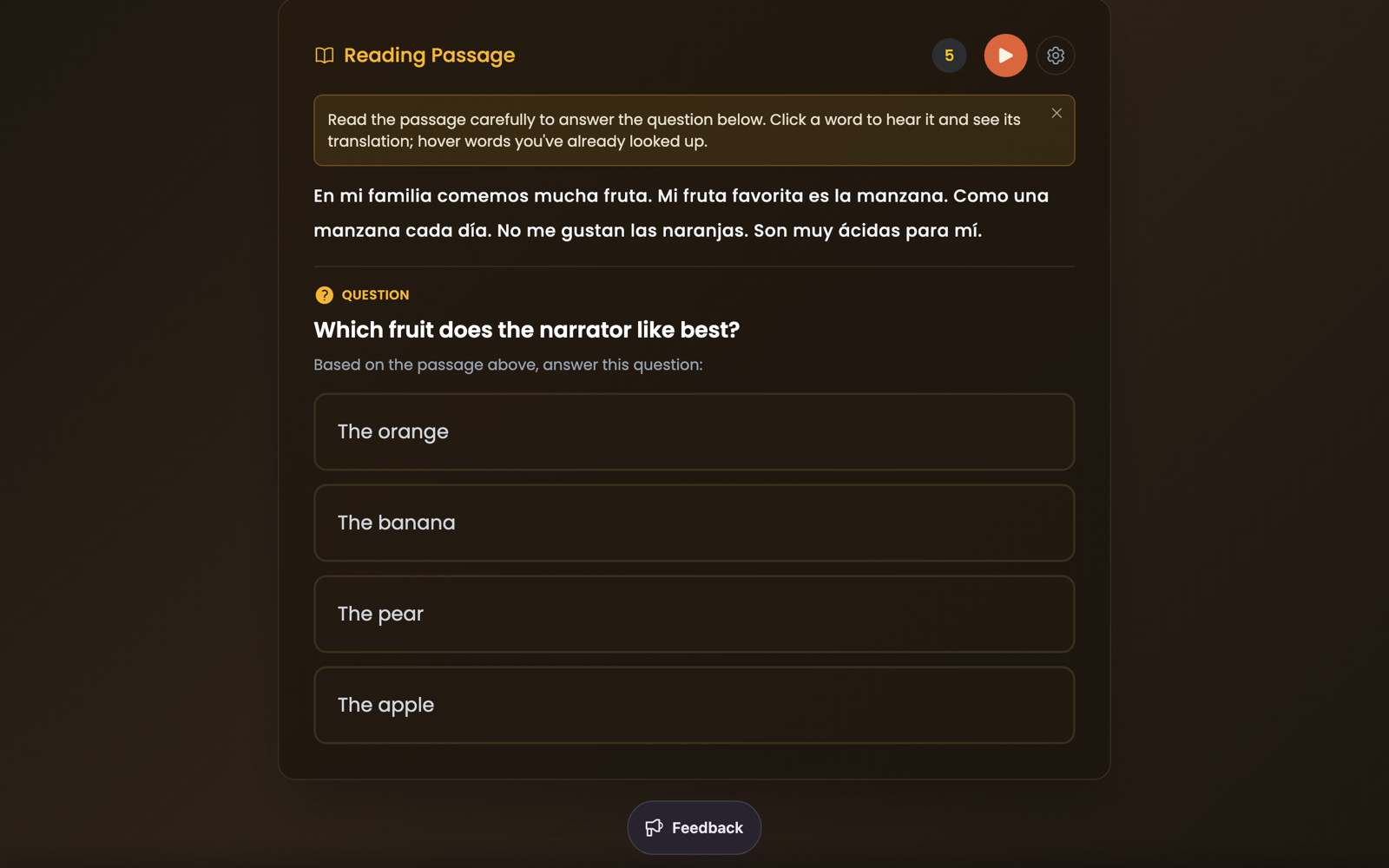
comprehendo
Reading practice in 15 languages. Generated items are gated by a documented item-writing standard - passage-dependency validity, distractor trap types, lexical coverage - then by automated answer-key and multi-trait quality checks that fail closed. In soft launch with real learners.
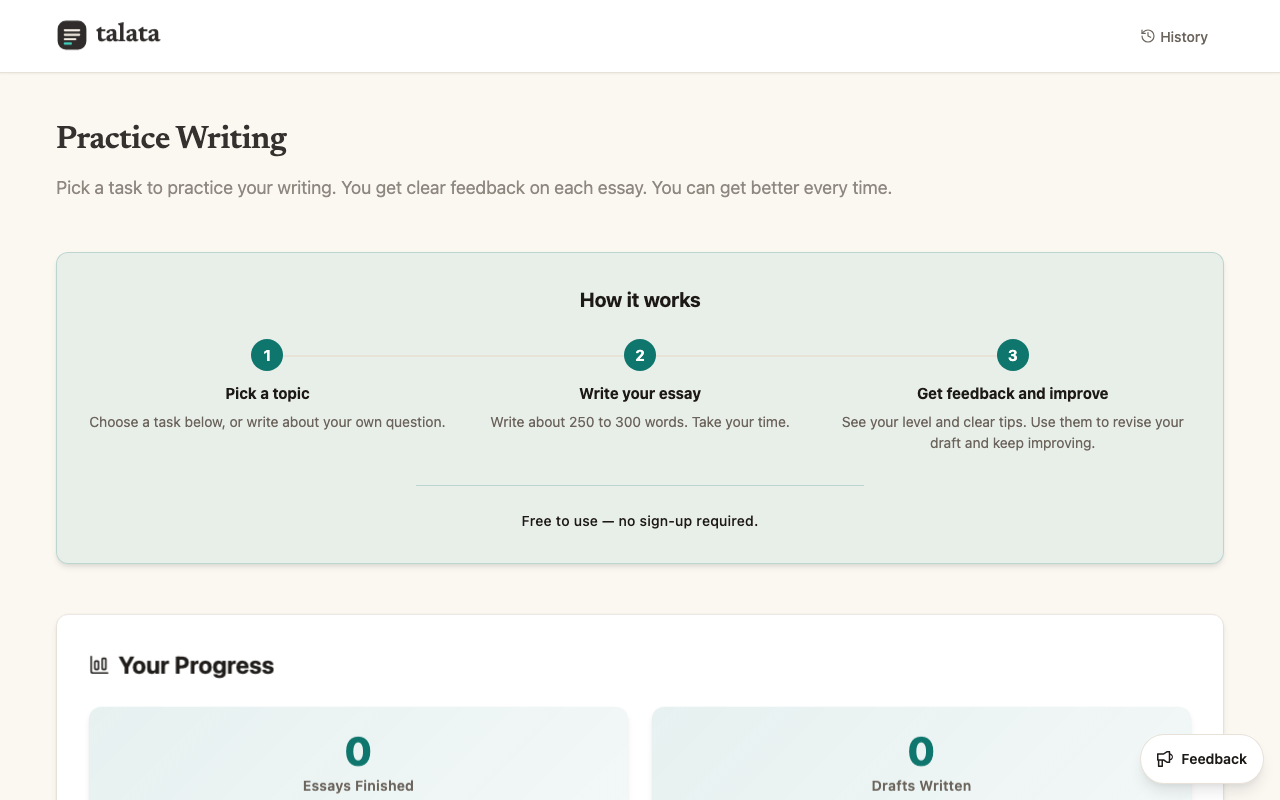
talata
AI essay scoring and feedback, free and non-commercial. A fine-tuned DeBERTa-v3 scorer returns four trait bands and an overall estimate - held-out QWK 0.76, MAE 0.63 - with two grammar-correction models served as GPU microservices on Modal. A commercially clean holistic checkpoint (frozen QWK 0.85) is kept working as the switch back.
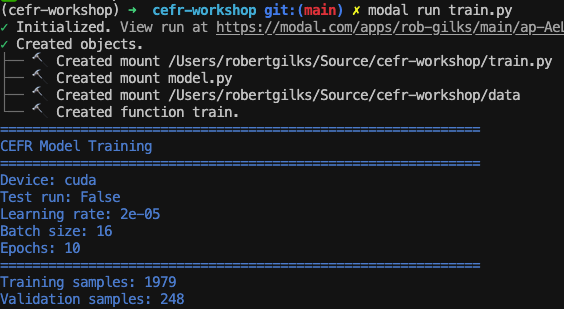
cefr-workshop
A seven-part workshop teaching engineers to fine-tune DeBERTa-v3 for CEFR level prediction on serverless GPUs - problem framing through to deployment. MAE 0.375, QWK 0.776, 99.6% adjacent accuracy.
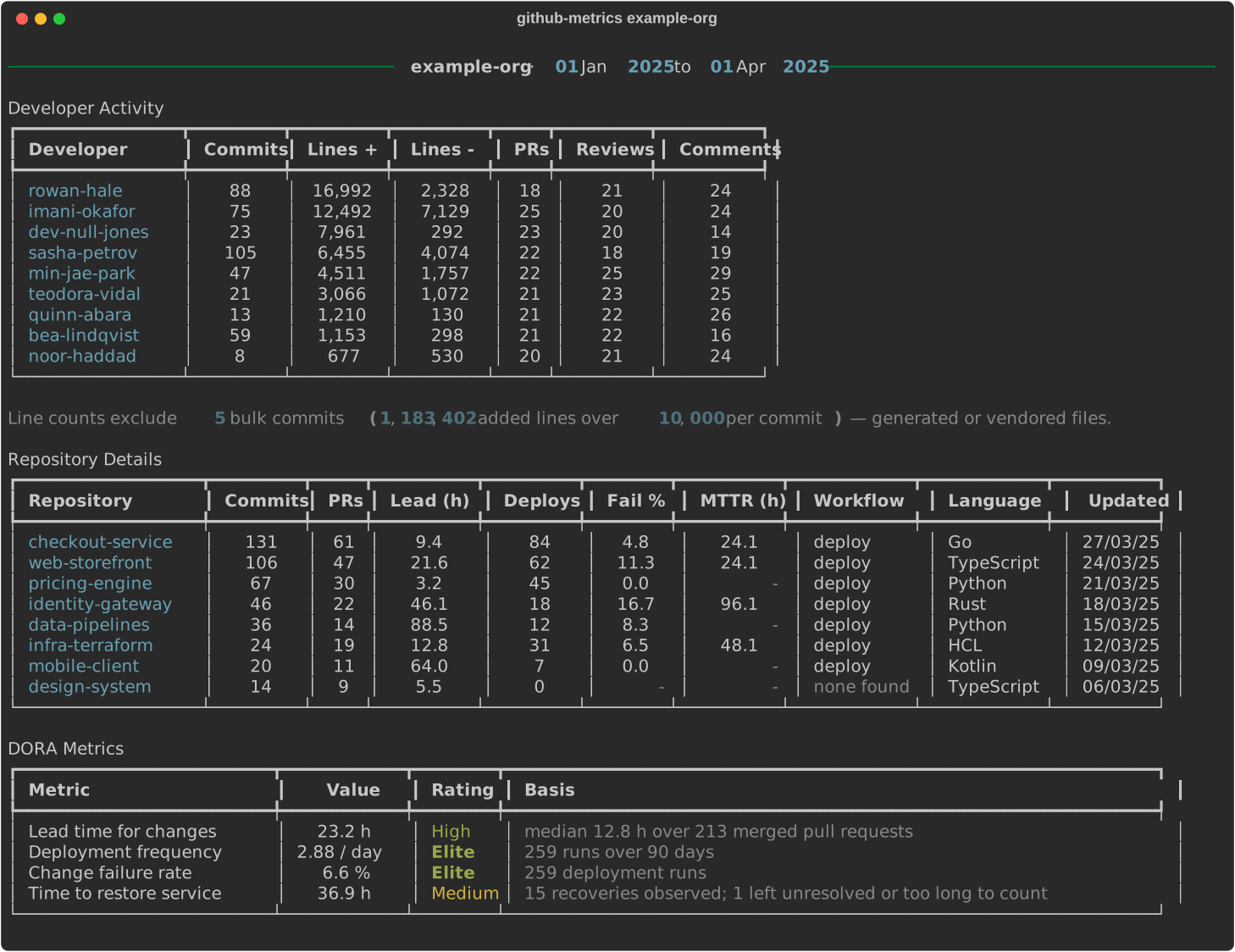
github-org-metrics
Python CLI for DORA metrics, PR cycle times, code churn and contribution patterns across an organisation. I wrote it to measure my own team at Cambridge, and it is what their delivery figures were reported from.
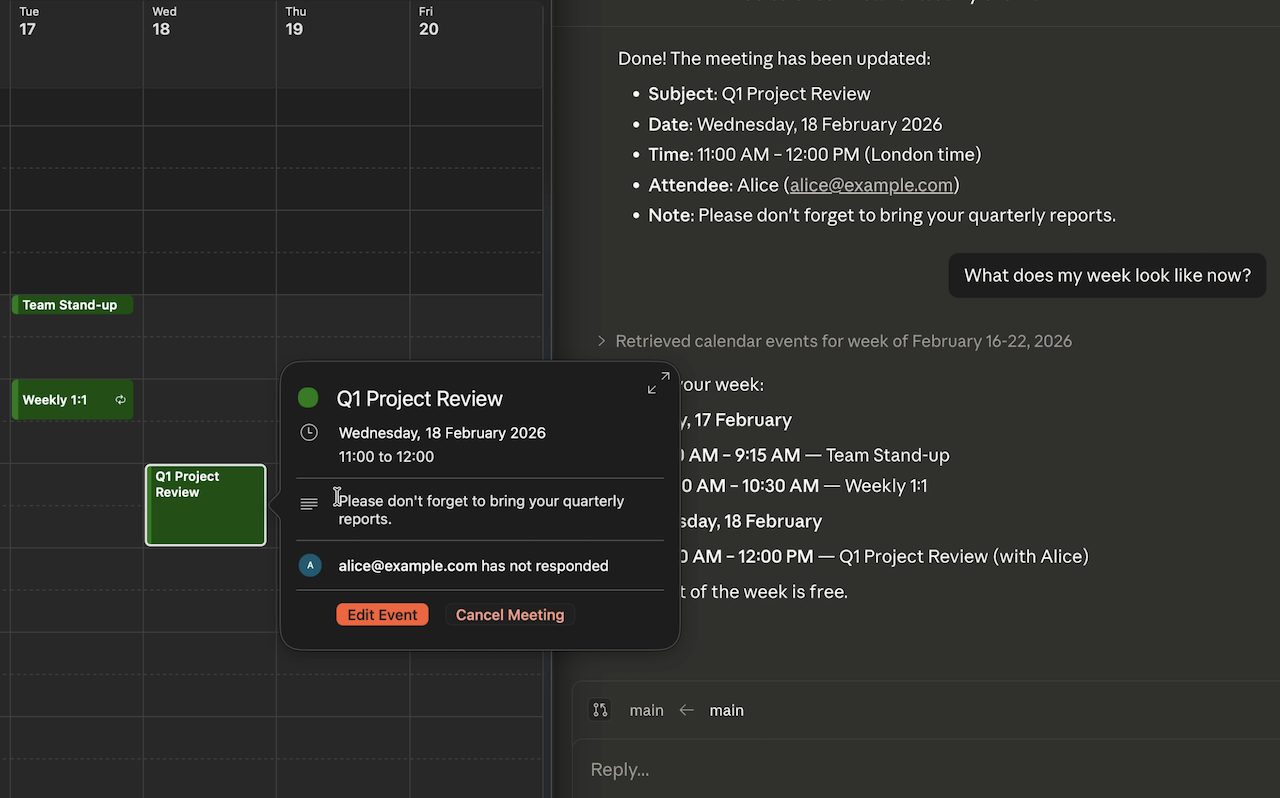
Office Assistant
MCP server for managing Microsoft 365 calendars in plain English, built in Python on Microsoft Graph with delegated access.
Full portfolio on the home page - everything above is live, documented and tested.
last updated: 2026-07